
Opalware, melamine or stainless steel? Choosing tableware to stock
Most tableware buyers in the UAE end up stocking more than one material. Each one looks, feels and behaves differently, and each suits a different customer. Here is a plain comparison to help you plan your range.
What each material is
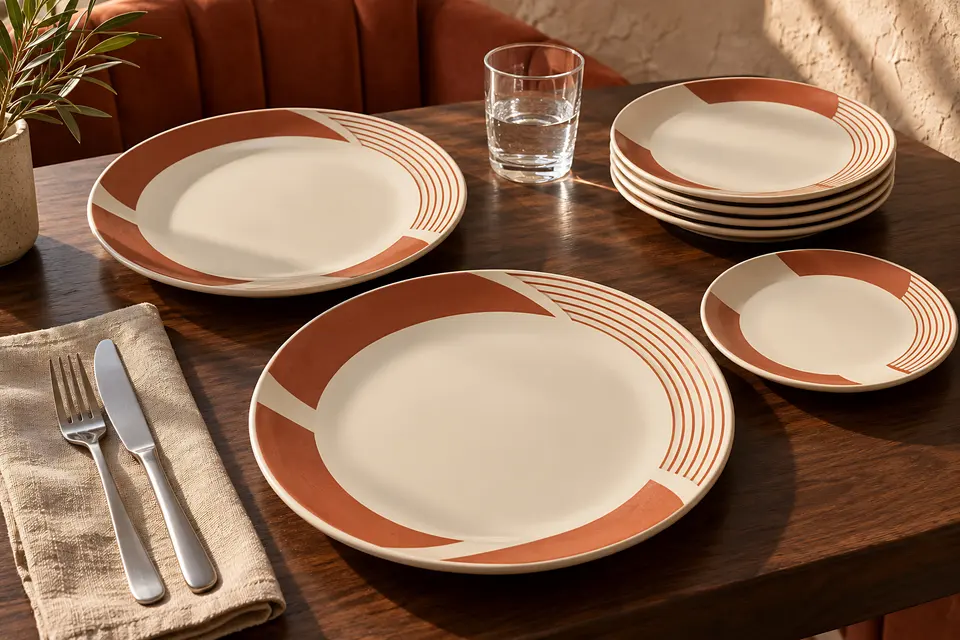
Opalware is tableware made from opal glass, a white glass that looks opaque rather than clear. The milky colour comes from tiny particles added to the molten glass, which scatter light.1 Opalware is usually white and is often decorated with printed borders and patterns.
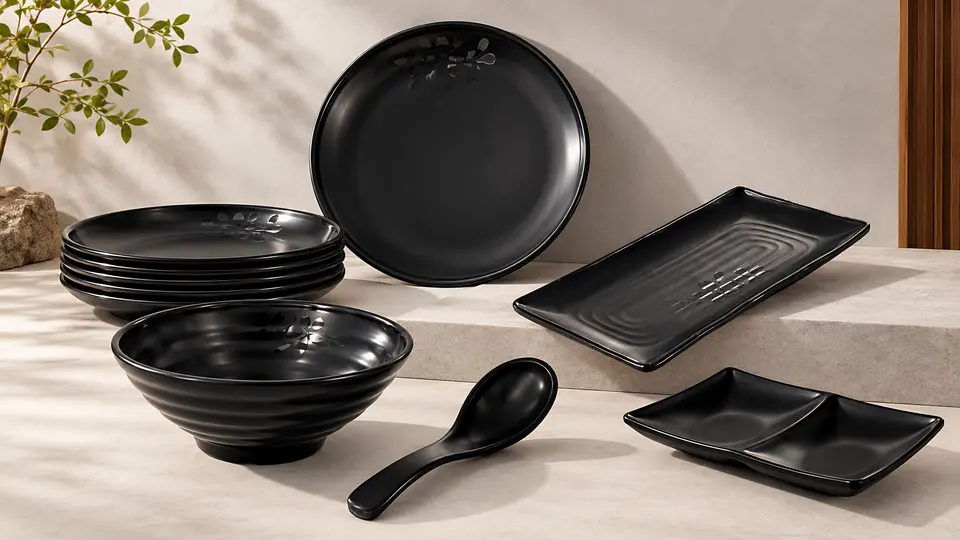
Melamine tableware is moulded from melamine-formaldehyde resin, a hard plastic. Because it is moulded, it comes in a very wide range of shapes, colours and printed designs.
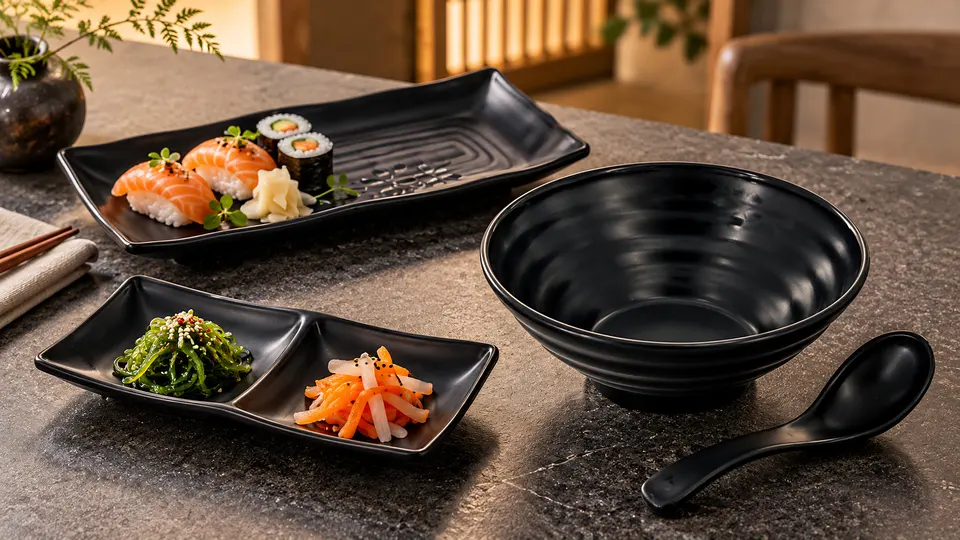
Stainless steel tableware is made from steel alloyed with chromium, and often nickel. Grades such as 18/10 and 18/8 describe the percentage of chromium and nickel in the alloy.3
Side by side
| Opalware | Melamine | Stainless steel | |
|---|---|---|---|
| Look | White glass, often with printed patterns | Any colour or print, matte or glossy | Metallic, polished or hammered |
| Weight | Medium to heavy | Light | Light to medium |
| Breakage | Glass, so it can break if dropped | Less likely to shatter than glass, but can chip or crack | Does not shatter; can dent or scratch |
| Microwave | Depends on the item; check its marking | FDA advises against heating food in melamine dishes in a microwave2 | Metal is not used in microwave ovens |
| Typical buyers | Households, discount and household shops | Households, restaurants, buffets, outdoor use | Households, restaurants, hotels, catering |
Care and use guidance always depends on the individual item. When you request a quotation, ask the supplier to confirm it for each product rather than relying on general rules.
Which material suits which buyer
Discount and household shops usually do best with a mix: opalware and melamine plates and bowls for everyday dining, plus stainless steel cutlery, trays and serving bowls. Customers can then build a full table from one shop.
Restaurants and cafés often choose melamine for serving platters, divided dishes and buffet bowls because it is light and comes in many shapes. Stainless steel covers cutlery, trays and serving pieces.
Hotels and caterers tend to prioritise consistency, so the same design can be reordered later, and care guidance that fits their dishwashing process.
Importers and distributors usually buy across all three materials so they can supply a range of shops in their own market.
Questions to ask before you order
- What exactly is the material of each item, and is it marked on the product or packaging?
- What sizes and designs are available now, and how many pieces come in each carton?
- What care and use guidance applies to each item, including dishwasher and microwave use?
- Can the same design be reordered later?
FAMES supplies opalware, melamine and stainless steel from Dubai. You can include all three in one enquiry.
Sources
- Wikipedia: Milk glass
- U.S. Food and Drug Administration: Melamine in Tableware: Questions and Answers
- WebstaurantStore: Flatware buying guide: stainless steel grades
Buying tableware wholesale? Send us the items and quantities you need and we reply with a quotation.